Sibling stories
A personalised sibling story with two equal voices
What to look for in a personalised sibling story when two children, cousins, or loved ones share the page—and the reading moment.
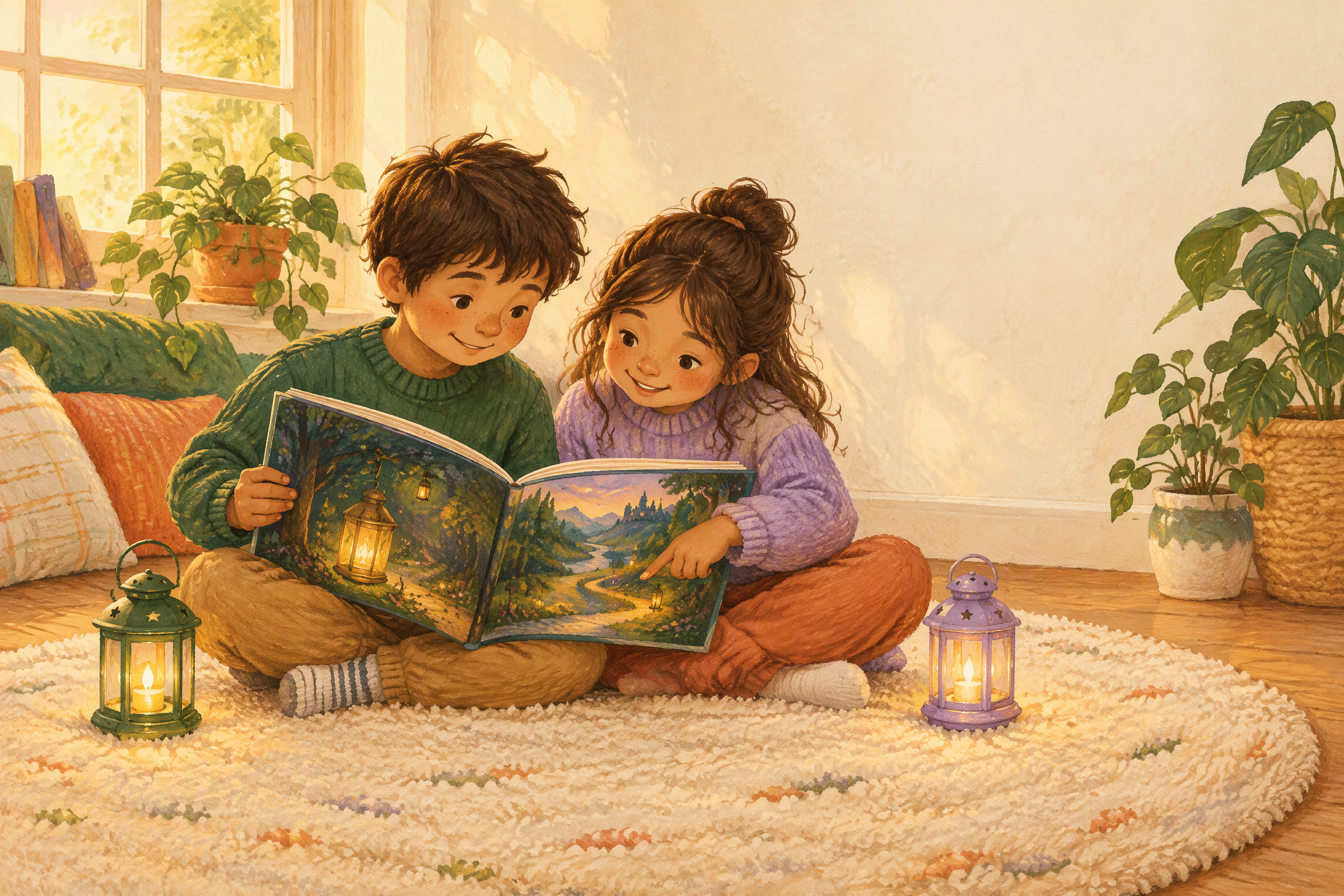
A shared story can be a lovely invitation for two children to notice, laugh, disagree, and imagine together. The best sibling stories do not need to make siblings identical or endlessly harmonious. Instead, they can give each child a real turn in the plot, a different way to notice something, and a small reason to move forward together. The story becomes more valuable when the grown-up keeps it low-pressure: two children can share a book without sharing every feeling, every sentence, or every turn in exactly the same way.
A gentle starting point
Read these ideas before choosing a personalised sibling book or before beginning a shared read-aloud. They work for siblings, cousins, friends, and a child with another loved one. Leave out anything that does not suit the relationship in front of you.
A shared story works better when both children have a reason to be there
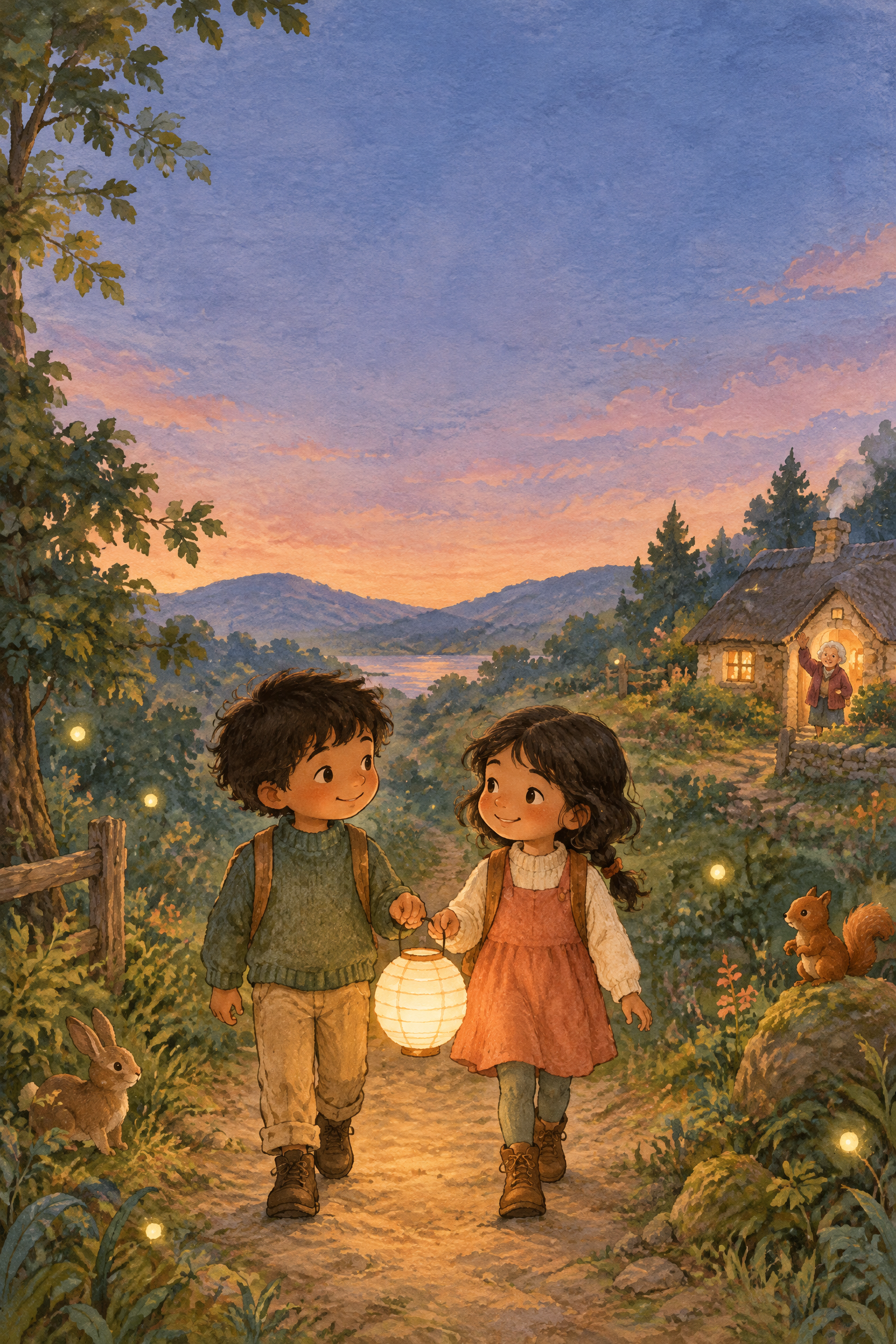
In a strong shared story, each reader brings something distinct. One child might notice a clue. Another might ask the brave question. One might carry the lantern while the other spots the path. The point is not to divide the story into equal fractions; it is to make both children feel that the adventure changes because they are in it.
That matters when siblings are different ages, have different interests, or arrive at a book with different levels of energy. A younger child may point to the picture while an older child reads a line. One might laugh at a small animal while the other wants to predict the next page. Both are participating. The grown-up can notice the difference without ranking it.
If you are choosing a personalised sibling story, check that the personalisation respects both names and both roles. A two-reader story should not quietly turn one child into the hero and the other into a helper. Clear, equal roles make the book easier to return to when ordinary sibling feelings are complicated.
Make turn-taking a possibility, not a rule
Taking turns can be playful when it stays flexible. You might invite one child to choose the page and another to find a detail. Or one can hold the book while the other turns the page. These tiny roles give each child a way in without asking them to sit still, read aloud, or enjoy the story in a particular manner.
Do not worry if one child wants to lead for a while. A shared read does not need a scoreboard. You can say, “You chose that page. Let’s see what your sister notices on this one,” and let the moment shift naturally. When an adult stays calm about whose turn it is, the book can remain a source of connection rather than another place to compete.
If tension rises, it is okay to pause the story. Keep the boundary simple: “This book needs safe hands. We can try again later.” Then choose a separate activity, a different book, or a quiet reset. The story will still be there.
Let the relationship label fit the readers in front of you
A two-reader story can be for siblings, cousins, friends, a grandparent and child, or another pair of loved ones. The relationship does not need a long explanation. Choosing a simple label that feels true is enough. This keeps the story welcoming for many family shapes while avoiding the need to place more personal information inside a book than the story needs.
When the story is personalised, a grown-up can decide what names and relationship label belong on the private proof. That is a good moment to check that each child is represented as intended. The proof is not a creative test; it is simply a calm place to make sure the factual details are right before the final digital story arrives.
As the children grow, the same book can mean something different. The younger child may later become the reader. The older child may notice a new page. A shared story can keep a small record of togetherness without freezing either child into a role.
A three-page shared reading game
Choose, notice, carry
- 1Let one reader choose a page. Let the other reader point to one detail that matters to them. Both choices count.
- 2On the next page, swap the invitation. If someone does not want a turn, they can pass without losing their place in the story.
- 3Close with one shared action: close the book together, place a bookmark, or choose which page to revisit next time.
Two readers, equal roles
Two Voices, One Adventure
Make room for two names, two ideas, and one gentle adventure.
Two Voices, One Adventure is a two-protagonist personalised digital story for siblings, cousins, or another loved pair. Both readers follow a lantern path, take turns noticing what matters, and move the story forward together.
One two-protagonist personalised digital story
Alternating read-together moments
A grown-up chooses the names and relationship label, then reviews the private proof before delivery.
Five signs a shared story gives both readers room
01
Do both readers matter to the story?
A shared story feels stronger when each child has a useful observation, question, choice, or action. One reader should not exist only to admire the other.
02
Is there a turn-taking rhythm?
Try one child reading or pointing to a page, then the other choosing the next detail. A rhythm can be playful without forcing either child to perform.
03
Can different ideas both have a place?
A good story can let one child notice the map while another notices the lantern. Difference can be part of the adventure rather than a problem to solve.
04
Is the relationship label clear and simple?
Use the label that fits—siblings, cousins, friends, grandparent and child, or loved ones—without asking for a larger family story than the book needs.
05
Can the grown-up keep the shared reading low-pressure?
One child may want to lead, another may want to listen, and both may change their minds. A shared story does not need equal speaking time to be a good moment.
A little closing thought
Together does not have to mean the same.
A personalised sibling story can hold two names while still leaving room for two different ways of being in the world. Look for a story that gives each reader dignity, avoids making one child responsible for the other, and leaves your family free to return to the pages in its own way.