New sibling gifts
Choosing a new-sibling story gift with the parent in mind
Four simple questions that help a relative or friend choose a new-sibling story gift without asking for a child’s private details.
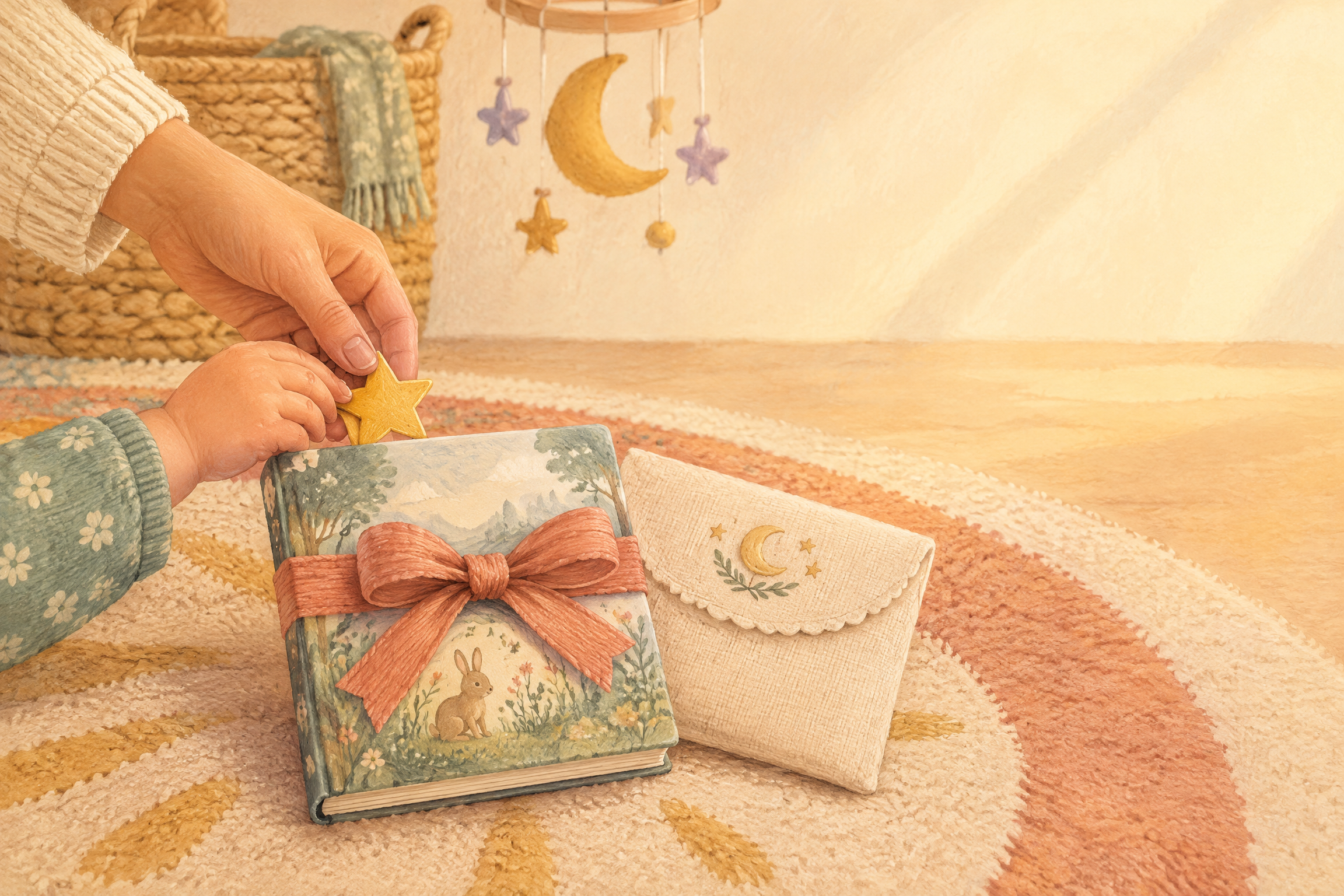
A book can be a thoughtful way to mark a growing family. The kindest gift process is usually simple: the gift giver chooses the gesture, and the parent decides what, if anything, should be personalised. That keeps the story meaningful without putting the child’s name, photo, birth details, or family information into a wider gift exchange. It also gives the family room to use the book when it feels right—not only on the day the baby arrives or the gift is opened.
A gentle starting point
Use these questions before buying a book or sending a gift note. They are not a checklist for the family. They are a way for the gift giver to keep the gift warm, useful, and easy for the parent to receive.
A new-sibling gift can notice a big change without writing the family’s script
A growing family can bring delight, tiredness, pride, uncertainty, and many ordinary adjustments. A gift does not need to tell an older child how thrilled, helpful, patient, or grown-up they should be. A better story makes room for a child to still be themselves while the family picture shifts around them.
Look for a story that gives the older child a real place in the pages. That might mean noticing their questions, their familiar routines, their imagination, or the small ways love can stretch without becoming a competition. The book does not have to explain everything about a new baby. It can simply offer a gentle moment of recognition.
For a relative or friend, the most generous gesture is to offer the book without needing a performance back. A short note such as “Thinking of your growing family and the stories you will share” is plenty. Leave the parent free to decide when to read it, whether to personalise it, and how much to share.
Personalisation should make the gift easier, not more intrusive
Personalised stories can feel especially meaningful at a family milestone, but personalisation works best when it stays bounded. A gift giver can choose an edition and write a simple message. The recipient parent can privately choose the child’s first name and the details that belong in the story. That division keeps the gift warm while protecting the family’s information.
There is no need for a purchaser to collect a child’s full name, birthday, photo, school, address, or a detailed family history. In fact, a parent-completed route can be a feature of the gift. It gives the family control over the story while still letting the giver contribute something thoughtful and personal.
Before you buy, check the delivery flow. The parent should know who receives the setup email, whether they can see an adult proof, and how one factual correction is handled. Clear delivery details are part of a considerate gift, especially during a busy season.
Choose a story that can grow into an ordinary ritual
A milestone gift can be more useful when it is not trapped inside the milestone. A story with a little room for rereading can become a quiet bedtime choice, a lap-book for a waiting room, or a familiar page during a wobbly afternoon. The best timing might be before a birth, after a birth, or months later when the household has found a new rhythm.
When reading together, let the child decide what they notice. They may care about the stars, the animal on the page, the bookplate, or the character’s small task—not the family message adults imagine is most important. That is fine. A story can be meaningful in ways that do not fit inside a single conversation.
If the older child asks a difficult or unexpected question, you do not need a book-perfect answer. You can pause, say what you know in a simple way, and let the question return later. The book is only one small companion; the relationship around it is what makes the moment safe.
A gift note that leaves room
Keep the message warm and light
- 1Choose one short message for the grown-up, rather than a promise about how the older child will feel or behave.
- 2Let the parent complete any child details privately and choose the moment that works for reading the story.
- 3When the book arrives, offer a simple invitation: “This is here whenever you would like a story together.”
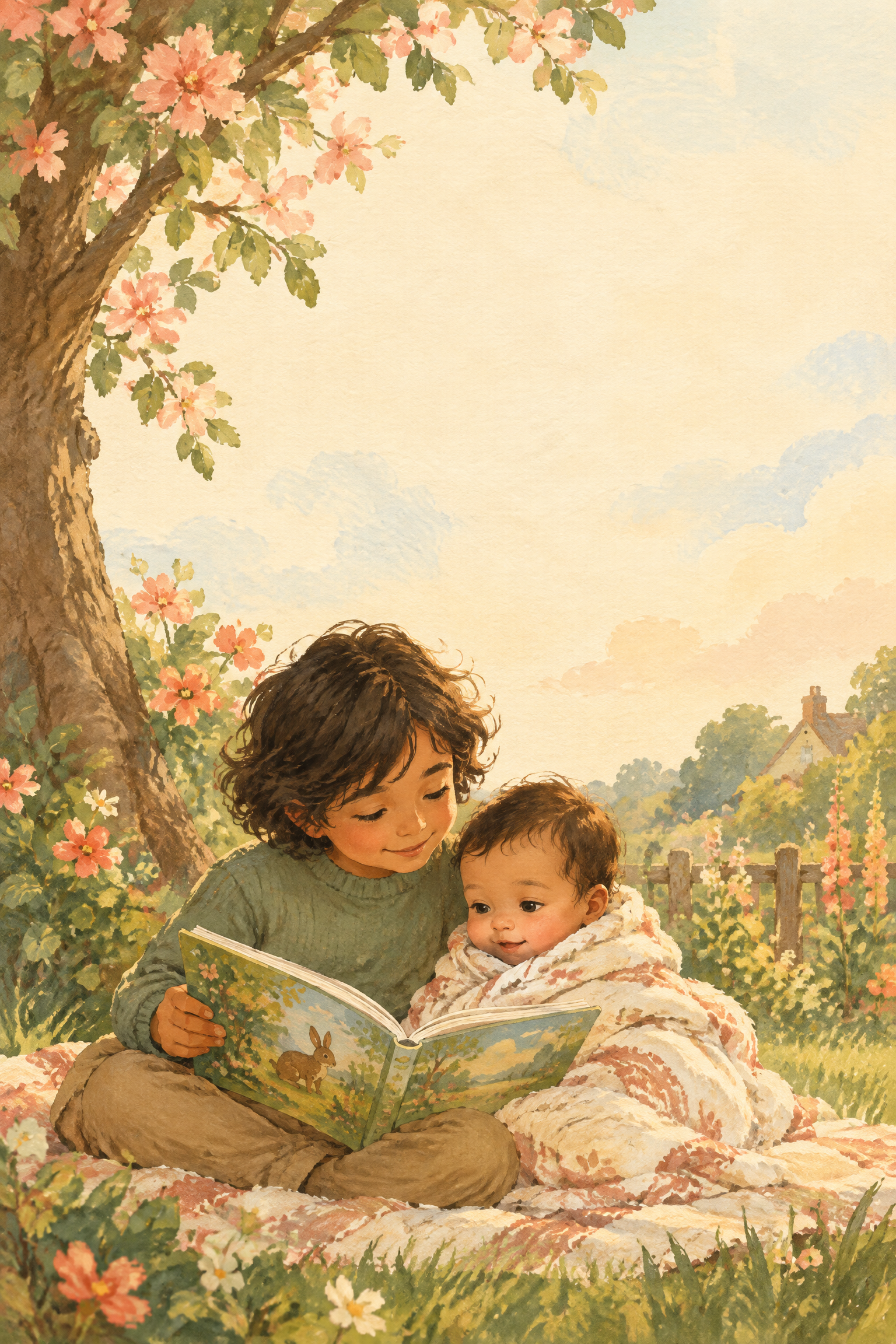
A private, parent-led gift path
Room for One More Star
Give a story that makes room for the child who is already here.
Room for One More Star is a personalised digital story about a family growing while every small star still has a place. The grown-up chooses the child details privately and reviews a proof before the story is delivered.
Personalised 5–8 minute digital story
Family Bookplate dedication
A thoughtful gift giver can choose the gesture; the recipient parent controls any personalisation.
Four questions before choosing a new-sibling story gift
01
Does the story make room for the older child’s place in the family?
Look for language that notices the older child without making them responsible for being endlessly cheerful, helpful, or grown-up.
02
Can the parent complete personal details privately?
A thoughtful personalised gift lets the recipient parent choose the names and any permitted details. A gift giver does not need access to that private information.
03
Can the book be read more than once?
A new-baby moment changes quickly. A story with room for rereading, pointing, and different feelings can stay useful beyond one announcement day.
04
Is the gift message short and parent-friendly?
One warm line is enough. Avoid promises about how the older child will react or what the new family should feel.
05
Does the delivery process feel clear?
For a digital personalised story, the parent should know when a private setup or proof will arrive and how they can correct a factual detail before final delivery.
A little closing thought
The gift is the invitation, not the instruction.
A new-sibling story gift works best when it says, “I’m thinking of you,” then gives the parent room to decide what happens next. Keep the message light, protect the child’s private details, and let the family use the story in whatever way fits their season.